Why visit Kedarnath?
- Sacred Jyotirlinga darshan
- Gaurikund to Kedarnath trek planning
- Helicopter, pony and palki guidance
- Guptkashi or Sitapur stay options
Plan Kedarnath Dham darshan with trek, helicopter, hotel, transport and route break support from Haridwar or Rishikesh.
Best time: May to June and September to October
Kanishka Travel can plan hotels, vehicle, meals, route breaks and local guidance for this destination.
Handcrafted tour itineraries matching this guide with verified mountain cabs, deluxe stays, meals, and 24x7 local support from Dehradun.
Plan Kedarnath Dham darshan with trek, helicopter, hotel, transport and route break support from Haridwar or Rishikesh. Kanishka Travel helps travelers compare route timing, hotel category, private vehicle options, meal plans and practical weather guidance before confirming the journey.
Plan Kedarnath Dham darshan with trek, helicopter, hotel, transport and route break support from Haridwar or Rishikesh.
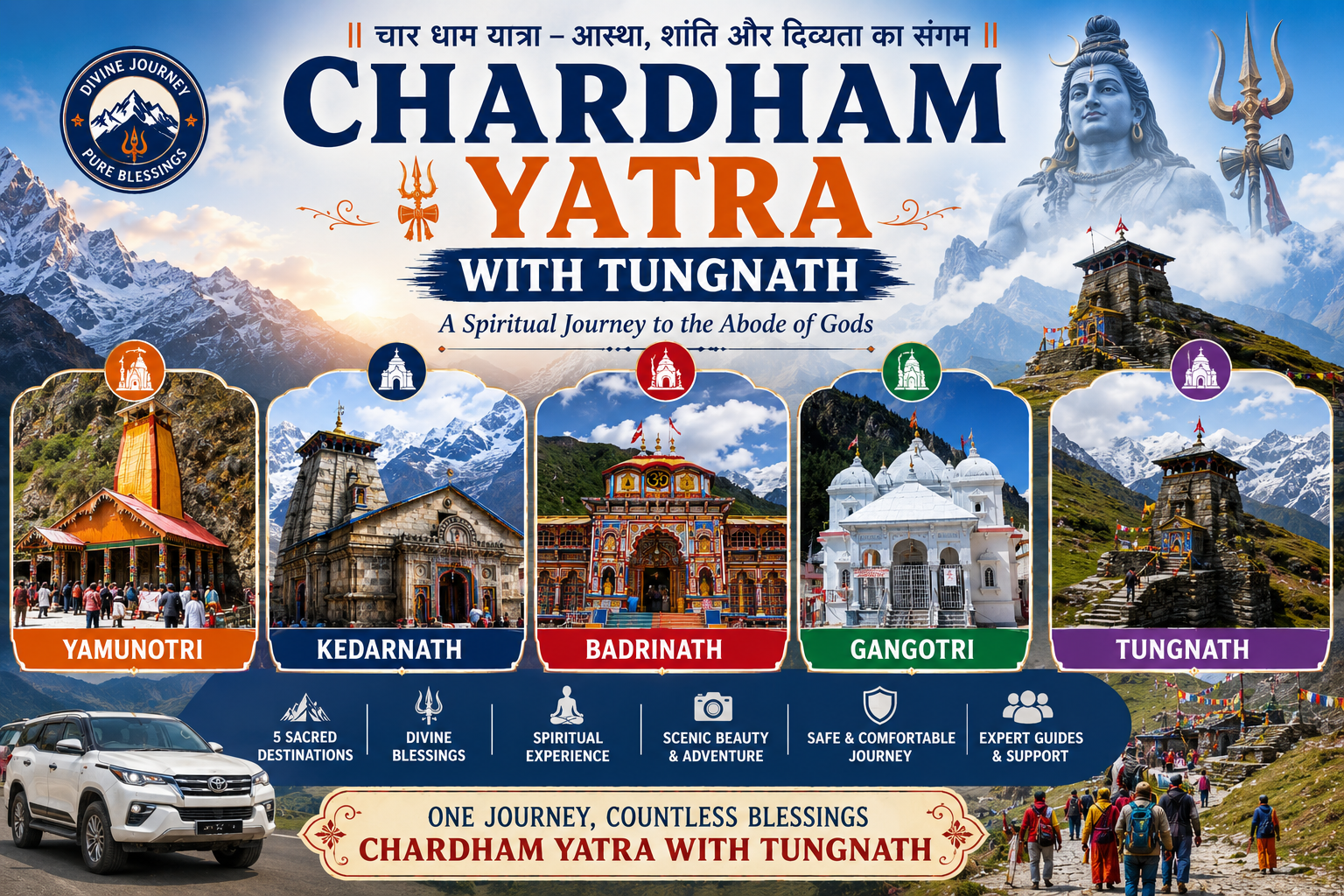
The sacred Char Dham Yatra of Uttarakhand—encompassing Yamunotri, Gangotri, Kedarnath, and Badrinath—is the pinnacle of Hindu spiritual pilgrimages. According to ancient Sanatana tradition instituted by Adi Shankaracharya in the 8th century, the yatra must strictly follow the clockwise 'Parikrama' sequence from West to East: beginning with purification at Yamunotri (abode of Goddess Yamuna, 3,291m), proceeding to Gangotri (abode of Mother Ganga, 3,415m), ascending to the supreme Jyotirlinga at Kedarnath (seat of Lord Shiva, 3,583m), and concluding with moksha at Badrinath (sanctum of Lord Vishnu, 3,300m). Traveling this sacred 10 to 12-day circuit across Garhwal cleanses karmic burdens and brings profound inner peace.
Every pilgrim undertaking the Char Dham or Do Dham yatra must complete mandatory biometric registration on the official Uttarakhand Government portal (Tourist Care Uttarakhand / UK Tourism). Registration generates a unique Yatra Registration Card (QR code slip) that is verified at multiple physical checkpoints across Haridwar, Rishikesh, Barkot, Sonprayag, and Joshimath. In addition, temple boards have implemented automated token slot kiosks at Sonprayag (for Kedarnath darshan) and Badrinath to regulate daily entry queues and avoid stampedes. Kanishka Travel provides end-to-end registration assistance for all booked guests so your trip proceeds without paperwork delays.
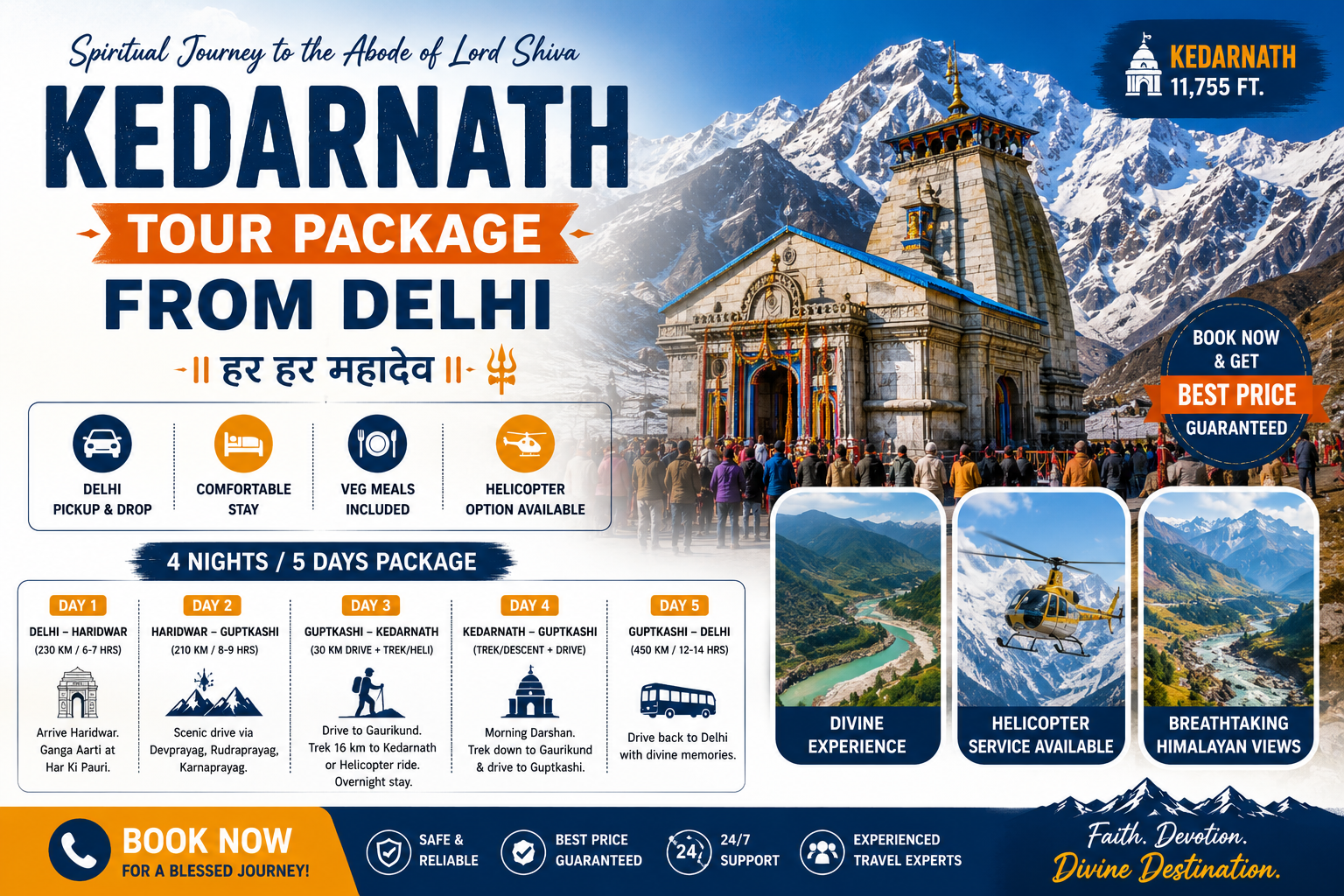
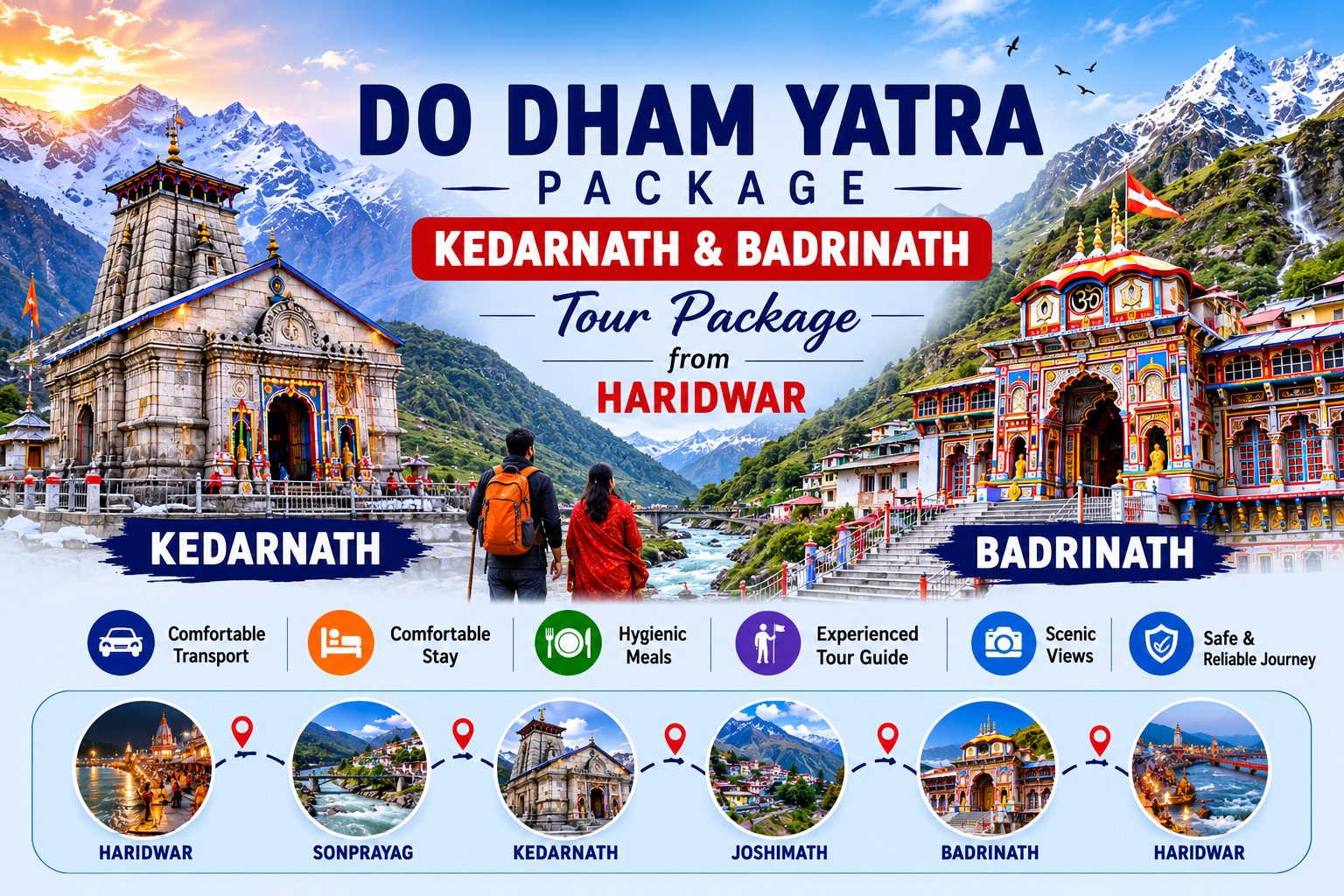
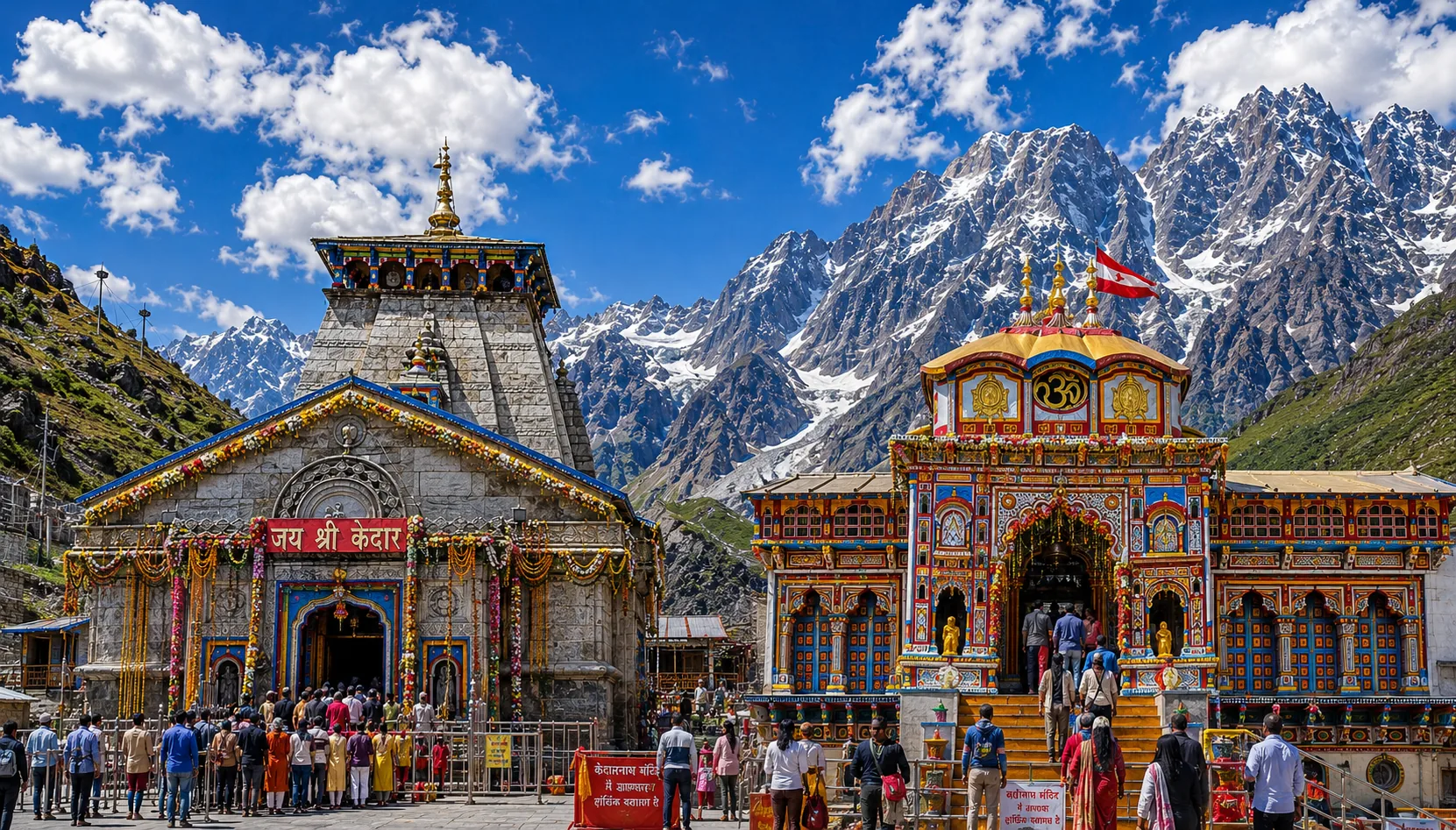
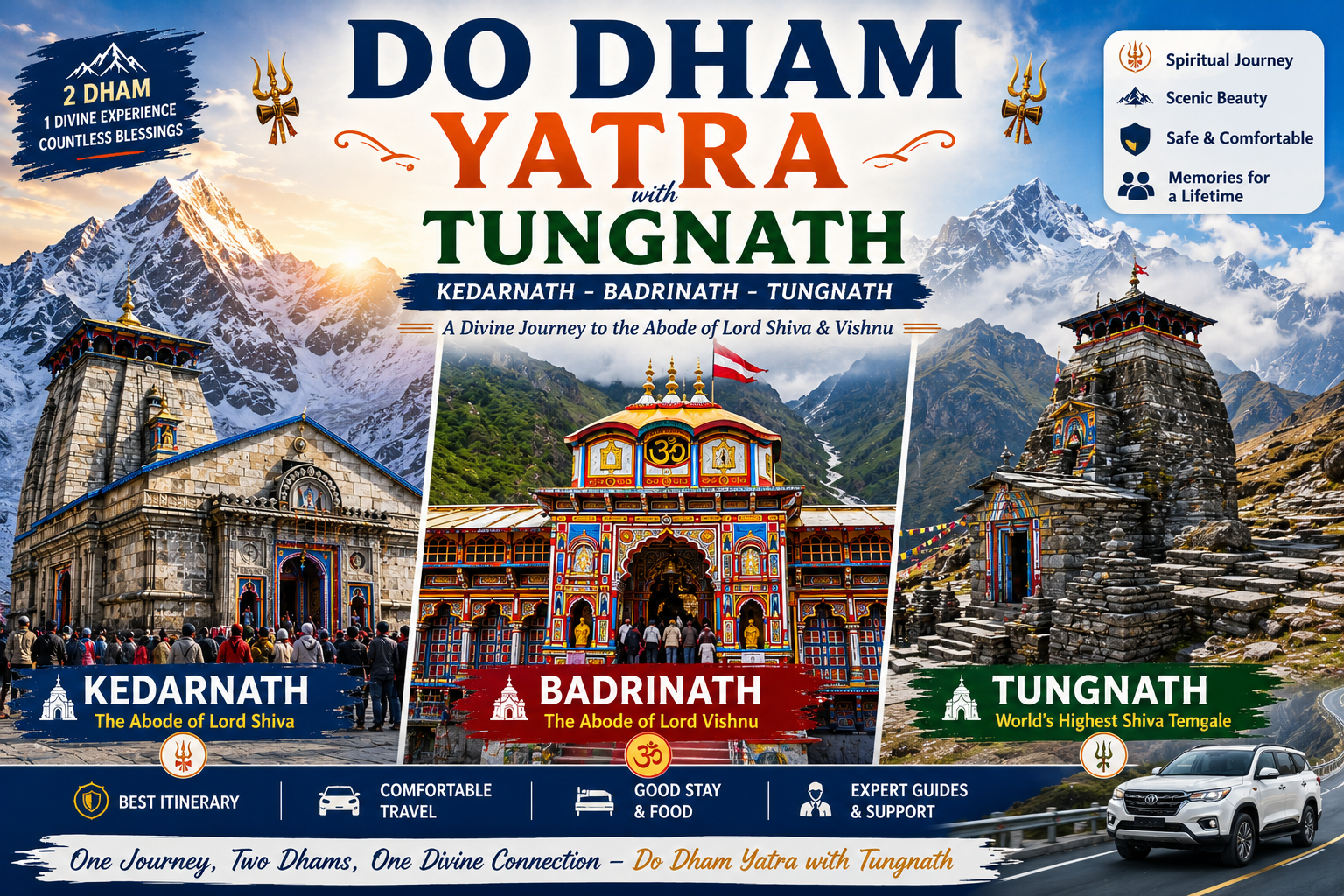
Kedarnath Ji is located in the Mandakini river valley surrounded by snow-capped Kedardome peaks. The pilgrimage involves a 16 to 19 km uphill mountain trek starting from Gaurikund (1,982m) through Jungle Chatti, Bheem Chatti, and Lincholi to Kedarnath base (3,583m). For pilgrims unable to trek, government-authorized helicopter shuttles operate from Phata, Guptkashi, and Sirsi helipads directly to Kedarnath helipad in 8 to 10 minutes (strictly booked via the IRCTC Heli Yatra portal). Alternatively, verified ponies, pithus (baskets), and palkis (dolis) are regulated with standardized government token counters at Gaurikund.
Nestled between the Nar and Narayan mountain ranges alongside the roaring Alaknanda River, Badrinath Dham is the foremost of the 108 Divya Desams. Before entering the vibrant multi-colored temple sanctum for Mangal Aarti or Maha Abhishek darshan, devotees take a sacred dip in the natural sulfur hot water spring of Tapt Kund (45°C). Just 3 km past Badrinath lies Mana Village, the mythical 'Last Indian Village' on the Indo-Tibetan border, housing the sacred Bhim Pul bridge over the Saraswati River, Vyas Gufa (where Sage Vyasa composed the Mahabharata), and Ganesh Gufa.
The Char Dham temples open annually on Akshaya Tritiya (late April / early May) and close shortly after Diwali (October / November). May and June witness peak pilgrim footfalls, pleasant daytime weather, but heavy highway traffic and long darshan queues. July and August encounter monsoon rains, requiring cautious driving due to landslide-prone stretches near Chamoli and Rudraprayag. September and October are regarded by seasoned yatri as the golden window: crystal-clear blue skies, crisp mountain air, negligible crowds, and rapid darshan times with stunning views of snow-covered peaks.
Ascending above 10,000 feet exposes travelers to reduced atmospheric oxygen and lower barometric pressure, which can trigger Acute Mountain Sickness (AMS). Symptoms include headache, nausea, shortness of breath, and fatigue. To mitigate AMS, Kanishka Travel designs itineraries with progressive altitude halts (Barkot -> Uttarkashi -> Guptkashi before Kedarnath). All pilgrims, especially senior citizens and individuals with hypertension or respiratory ailments, should carry portable oxygen canisters, keep hydrated with electral/water, take frequent rests, and undergo mandatory health screenings at Sonprayag medical counters.
Accommodation quality on the Char Dham highway varies widely. Our packages feature handpicked, pre-verified properties: deluxe hotels with attached western bathrooms in Barkot and Uttarkashi, scenic luxury Swiss cottage tents with private baths in Guptkashi / Sitapur, and clean GMVN cottages or pre-booked rooms near the Kedarnath temple complex. All partner properties provide pure vegetarian dining (no onion-garlic options available on request) and reliable hot water facilities to rejuvenate you after long driving days.
The Char Dham circuit spans over 1,400 to 1,600 km of hill driving. Vehicle reliability and suspension comfort are critical for senior citizens and families. For private groups of 2 to 6 passengers, Toyota Innova Crysta and Maruti Ertiga provide superior ground clearance, plush push-back seating, and ample boot space. For larger family groups of 8 to 26 people, our modified luxury 12/17/26-seater Tempo Travellers feature high roof clearance, audio systems, and individual reclining seats, driven by veteran Garhwali chauffeurs who understand mountain driving etiquette.
Kanishka Travel operates with 100% price transparency. Every written quotation explicitly breaks down inclusions: vehicle rental, commercial green cess, state permit taxes, toll charges, parking fees, driver night allowances, pre-booked hotel rooms, and daily meal plans. There are never surprise fees or fuel surcharges added mid-tour. We also assist with porter arrangements, VIP darshan passes, and emergency rescheduling if weather delays require itinerary adjustments.
Helpful answers based on this page, package, destination and common Uttarakhand travel planning needs.
May to June and September to October are preferred for many yatra routes. Winter and monsoon plans need extra weather and road flexibility.
Advance booking is recommended during Char Dham season, long weekends, school holidays and snowfall periods because hotels and vehicles fill quickly.
Yes, but the route should be planned with realistic halts, suitable hotels, medical awareness and clear walking or helicopter choices.
The team coordinates practical route adjustments, timing changes and stay changes according to local conditions and safety advice.
Some yatra routes require official registration or local formalities. The team guides travelers about the required process before travel.
Booking is usually confirmed with advance payment after route, hotels, vehicle, inclusions and cancellation terms are shared clearly.
Shopping, tips, laundry, extra snacks, personal orders, travel insurance and services not listed in the quote are usually excluded.
Yes, family routes can be planned with comfortable breaks, safer timing, suitable hotels and vehicle options.
Yes, route and coordination support is available by phone or WhatsApp during the journey as per the confirmed package.
Open the package or contact page, share your travel date, pickup city, group size and hotel preference, then review the suggested route and quote.