
Kedarnath Temple History, Mystery, Travel Guide & Best Time to Visit is a practical Kedarnath Travel Guide article designed to help travelers understand the route, timing, stay choices and booking basics before they confirm a trip. It explains the most important planning points in simple language so readers can quickly understand what the journey covers, who it suits and how the route usually works in real conditions. The article also gives useful context around season, hotel selection, vehicle comfort, registration where needed, expected costs, packing tips and the type of support travelers can ask for while comparing options. The page summary is built around the main topic so Google and readers can instantly see what the article is about: Read Kedarnath Temple history, mystery, architecture, 2013 flood miracle, best time to visit, how to reach, trek details and FAQs for Kedarnath Yatra. If you are reading with a family, senior citizens, a group or a first-time traveler, this introduction helps you decide whether the guide matches your travel month, budget and route preference before you move deeper into the page.
Kedarnath Temple is one of the most sacred pilgrimage destinations in India and a powerful symbol of devotion in the Garhwal Himalayas of Uttarakhand. Surrounded by dramatic mountains, misty valleys, prayer flags, and the sound of temple bells, Kedarnath Dham attracts devotees, trekkers, and spiritual travelers who want to experience Lord Shiva's presence at one of India's highest and most revered shrines.
This Kedarnath Temple travel guide explains the history, mystery, architecture, 2013 flood miracle, best time to visit, route details, trek information, helicopter options, and frequently asked questions for pilgrims planning a Kedarnath Yatra.
Kedarnath Temple: Where Faith Meets Mystery
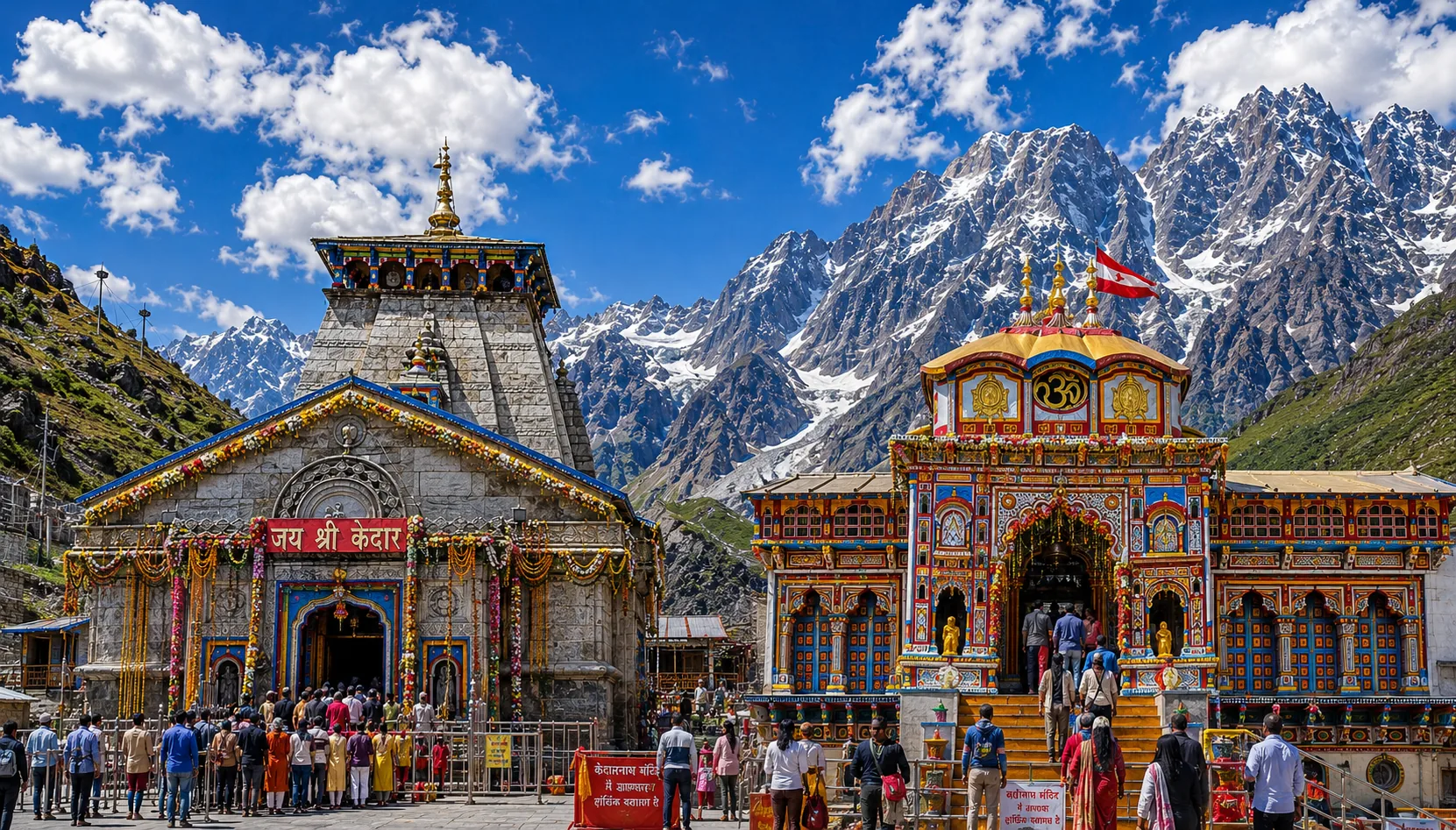
Kedarnath Temple is not only famous for darshan of Lord Shiva; it is also known for its mysterious Himalayan setting. The temple stands near the Mandakini River at around 3,583 meters, with snow peaks, clouds, and ancient stone walls creating a deeply spiritual atmosphere. The prayer flags, bells, and mountain views around Kedarnath make the journey feel like a meeting point of faith, nature, and mystery.
For SEO and image relevance, this section focuses on Kedarnath Temple travel guide, Kedarnath Dham, Himalayan pilgrimage, Lord Shiva temple, Uttarakhand Char Dham Yatra, and spiritual travel in Kedarnath. The photo represents the real devotional mood of the route: colorful flags, cloudy Himalayan slopes, and the sacred energy that pilgrims experience before reaching the temple.
The Pandavas and the Vanishing Shiva
According to Hindu belief, the Pandavas came to the Himalayas after the Mahabharata war to seek forgiveness from Lord Shiva. Shiva did not want to meet them directly and took the form of a bull. When the Pandavas recognized him, Shiva vanished into the earth, and different parts of the divine form appeared at the Panch Kedar temples.
Kedarnath is believed to be the place where the hump of Lord Shiva appeared. This connection with the Mahabharata makes Kedarnath Temple one of the most important spiritual sites for devotees of Shiva.
The Mystery Behind Kedarnath Temple Architecture
Kedarnath Temple is famous for its ancient stone architecture. Built with large interlocking stones, the temple has survived centuries of extreme weather, heavy snowfall, earthquakes, and floods. Its location in a high-altitude Himalayan valley makes the strength of the structure even more remarkable.
Many people believe the temple's design, placement, and stone construction show deep ancient knowledge of mountain conditions. The mystery of Kedarnath Temple architecture continues to attract historians, devotees, and travelers.
The 2013 Kedarnath Flood Miracle
In June 2013, Uttarakhand faced one of its most devastating natural disasters. Heavy rainfall and flooding caused massive destruction around Kedarnath. Yet the main temple structure survived, while a huge rock behind the temple helped divert the force of floodwater.
This event is often called the 2013 Kedarnath flood miracle. For many devotees, the survival of Kedarnath Temple became a sign of divine protection and strengthened the temple's spiritual importance.
The Guardians of Kedarnath Temple
Kedarnath is protected not only by its geography but also by tradition, faith, and disciplined temple rituals. The priests, local communities, rescue teams, porters, pony operators, and government support systems all play an important role in keeping the yatra active and safe.
The temple is also spiritually connected with Bhairavnath Temple, located above Kedarnath. Many devotees believe Bhairavnath protects the Kedarnath valley, especially during the winter months when the main temple remains closed.
A Journey Beyond the Physical World
The Kedarnath Yatra is physically demanding, but pilgrims often describe it as a journey beyond the body. The trek from Gaurikund tests stamina, patience, and devotion. The sound of chants, mountain silence, changing weather, and first view of the temple create an experience that stays with travelers for life.
For many people, Kedarnath is not just a destination. It is a spiritual transformation, a moment of surrender, and a reminder of the power of faith in the Himalayas.
Why Kedarnath Temple is Famous
Kedarnath Temple is famous because it combines mythology, history, natural beauty, difficult pilgrimage, and powerful faith in one sacred place. It is visited by Shiva devotees, Char Dham pilgrims, adventure travelers, and people searching for peace in the Himalayas.
One of the 12 Jyotirlingas
Kedarnath is one of the twelve Jyotirlingas of Lord Shiva and is considered among the most sacred Shiva temples in India. This makes it a major pilgrimage site for devotees from across the country.
Important Part of Char Dham Yatra
Kedarnath is one of the four temples of the Uttarakhand Char Dham Yatra, along with Yamunotri, Gangotri, and Badrinath. It is also an important part of Do Dham Yatra with Badrinath.
Connection with the Mahabharata
The temple's connection with the Pandavas and Lord Shiva gives it deep mythological value. This Mahabharata connection is one of the key reasons Kedarnath remains spiritually important.
Survival During the 2013 Flood
The survival of Kedarnath Temple during the 2013 flood made the shrine even more famous. The event is remembered as a miracle by many devotees and travelers.
Kedarnath Temple Facts
- Kedarnath Temple is dedicated to Lord Shiva.
- It is located in Rudraprayag district of Uttarakhand.
- The temple sits at an altitude of around 3,583 meters.
- Kedarnath is one of the 12 Jyotirlingas.
- It is part of the Char Dham Yatra and Panch Kedar.
- The temple usually opens in April or May and closes around October or November, depending on the Hindu calendar.
- The winter seat of Kedarnath is Omkareshwar Temple in Ukhimath.
Best Time to Visit Kedarnath Temple
The best time to visit Kedarnath Temple is generally May to June and September to October. These months offer better weather, clearer routes, and more comfortable yatra conditions compared with monsoon and peak winter.
Summer Season (May-June)
May and June are the most popular months for Kedarnath Yatra. The temple opens for the season, weather is relatively pleasant, and most travel services operate actively. This is also the busiest time, so advance planning is important.
Post-Monsoon Season (September-October)
September and October are excellent for pilgrims who prefer fewer crowds and clearer mountain views. After the monsoon, the weather can be fresh and scenic, but travelers should still check road and weather updates before starting.
Weather Conditions in Kedarnath
Kedarnath weather changes quickly because of high altitude. Days can be cool, nights are cold, and rain or snowfall can happen depending on the season. Carry warm clothes, rain protection, trekking shoes, medicines, and basic travel documents.
How to Reach Kedarnath Temple
Kedarnath Temple cannot be reached directly by road. Travelers usually reach Gaurikund by road and then continue to Kedarnath by trek, pony, palki, or helicopter service.
By Air
The nearest major airport is Jolly Grant Airport in Dehradun. From Dehradun, travelers can continue by road toward Guptkashi, Sonprayag, and Gaurikund. Helicopter services also operate from selected helipads during the yatra season.
By Train
The nearest major railway stations are Haridwar, Rishikesh, and Dehradun. From these stations, travelers can hire a taxi or take road transport toward the Kedarnath route.
By Road
Road access is available up to Sonprayag and Gaurikund, depending on local traffic rules and yatra arrangements. Common route points include Haridwar, Rishikesh, Devprayag, Rudraprayag, Guptkashi, Sonprayag, and Gaurikund.
Kedarnath Trek from Gaurikund
The Kedarnath trek starts from Gaurikund and is around 16 to 18 km, depending on route conditions. The trek is steep in sections and requires good walking shoes, warm clothing, water, and steady pacing.
Helicopter Service for Kedarnath
Helicopter services are available from helipads such as Phata, Sersi, Guptkashi, and nearby points during the yatra season, subject to weather and official permissions. Booking should be done only through authorized channels.
Frequently Asked Questions (FAQs)
What is the mystery of Kedarnath Temple?
The mystery of Kedarnath Temple is linked to its ancient stone architecture, high-altitude location, Mahabharata story, and survival during the 2013 flood. Devotees also believe the temple is protected by divine energy.
Who built Kedarnath Temple?
Many traditions connect Kedarnath Temple with the Pandavas, while the present structure is also associated with Adi Shankaracharya's revival of Hindu pilgrimage sites. Exact historical details vary across sources and beliefs.
What happened during the 2013 Kedarnath flood?
During the 2013 Uttarakhand floods, the area around Kedarnath suffered heavy destruction. The main temple survived, and a large rock behind it helped divert floodwater, which many devotees consider a miracle.
How difficult is the Kedarnath trek?
The Kedarnath trek is moderately difficult to difficult for many travelers because of altitude, distance, and steep sections. Seniors, children, and first-time trekkers should plan slowly and consider pony, palki, or helicopter options if needed.
What is the best time to visit Kedarnath?
The best time to visit Kedarnath is May to June and September to October. July and August bring monsoon risk, while winter months are closed for regular temple darshan because of heavy snow.
Related Articles
- Kedarnath Route and Darshan Guide
- Char Dham Yatra Comfort Guide
- Auli Chopta Best Time to Visit
Final Thoughts
Kedarnath Temple is a place where history, mystery, devotion, and Himalayan beauty come together. Whether you visit for Lord Shiva darshan, Char Dham Yatra, the Mahabharata connection, or the spiritual power of the mountains, Kedarnath leaves a lasting impression on every traveler.
Plan your Kedarnath Yatra with the right season, route, clothing, stay, and transport support so that the journey remains safe, comfortable, and deeply meaningful.